
The Charleston, SC Homeowner’s Guide to Pet-Friendly Landscaping
Ready to turn your Charleston backyard into a tail-wagging paradise that’s stylish and stress-free? With the right approach, you and your dog can enjoy all that a safe and stunning Charleston landscape has to offer.
Charleston’s Lowcountry landscape offers stunning plant options, but not all are safe for curious dogs. Some popular choices can cause health issues if nibbled or ingested. Add in summer heat and humidity, along with fleas and ticks, and it’s clear that a pet-friendly yard needs thoughtful planning.
With the right plants, hardscape materials, shade strategies and design choices, you can build a yard that’s both gorgeous and as safe as possible for your four-legged family member. This guide covers everything you need to create a pet-friendly landscape that thrives in Charleston’s climate.
Which Common Lowcountry Plants Are Toxic to Dogs?
Many popular Charleston plants endanger dogs and other animals. Some cause mild stomach upset, while others can be deadly even with aggressive veterinary treatment.
Here are the key offenders to avoid:
- Sago palms: Every part of this plant is poisonous, and pets might eat the seeds or leaves. Liver damage can happen quickly and be life-threatening. Even with aggressive treatment, more than half of dogs die from sago palm toxicity.
- Oleander: This plant is poisonous from root to flower for many animals and may be fatal to dogs within a day of ingestion. It causes gastroenteritis and can lead to cardiac arrest.
- Yellow jessamine: The entire plant is toxic. Ingestion can cause convulsions and possibly coma in dogs, making this beautiful vine a serious hazard for curious pets.
- Azaleas: Ingesting any part of an azalea causes salivation, vomiting, diarrhea, breathing difficulties, muscle weakness, convulsions and comas. Cardiac effects are also possible.
If you have any of these plants in your yard and own a dog, consider removing them or fencing them off completely.
What Plants Are Safe for Dogs in South Carolina?
There are plenty of beautiful, non-toxic plants that thrive in Charleston’s climate. Many native and adapted species offer color, texture and seasonal interest without the risk.
Here are some options that are not labeled toxic to dogs and work well in the Lowcountry:
- Lanceleaf coreopsis: This native’s bright golden daisy-like flowers need almost no maintenance and attract bees and butterflies. Blooming starts in early spring and continues through midsummer.
- Sunflowers: These cheerful annuals brighten any spot and make great cut flowers. They bloom from summer into early fall and are considered generally safe for dogs.
- Crape myrtles: These are shrubs or small trees that tend to thrive in hot climates. They grow pink flower clusters from later in the spring into early fall.
- Hibiscus: Beautiful flowering plants introduce tropical appeal with large blooms and vibrant colors. Hibiscus usually blooms in midsummer and fall in South Carolina’s climate.
Choosing native and adapted plants also reduces the need for harsh pesticides and fertilizers, which further protects pets that spend time in the yard.
Please note that any plant consumed in excess may cause gastrointestinal upset for your dog. Talk to your veterinarian if you have questions about a specific plant or if your pet has any dietary restrictions.
What Hardscape and Ground Cover Materials Are Best for Dogs?
The surfaces your dog walks and plays on also make a difference. Some materials are safer and more comfortable than others.
Pea gravel and flagstone pathways are durable, drain well and won’t overheat paws the way dark pavers or asphalt can. These materials withstand high traffic through the yard.
Not all mulch is safe for pets. Cocoa mulch smells like chocolate and contains theobromine and caffeine, the same compounds that make chocolate toxic to dogs. Even small amounts can poison pets. Pine bark and shredded hardwood are safer alternatives.
One of the most practical design moves is designating a specific potty area. Create a dog bathroom zone with pea gravel or washed stone and help protect your lawn from wear and urine damage.
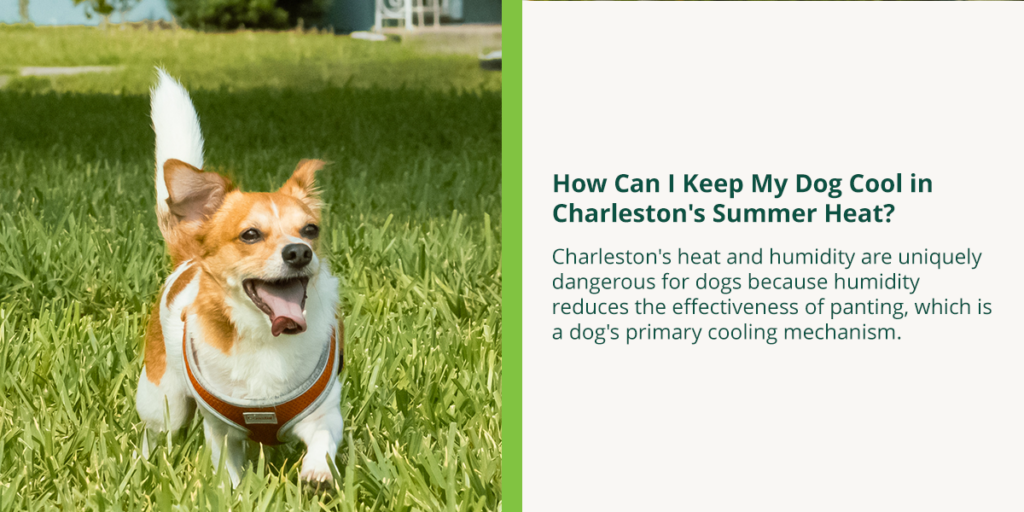
How Can I Keep My Dog Cool in Charleston’s Summer Heat?
Charleston’s heat and humidity are uniquely dangerous for dogs because humidity reduces the effectiveness of panting, which is a dog’s primary cooling mechanism.
Dogs can begin to overheat when their body temperature rises just a few degrees above normal. The American Kennel Club recommends providing constant access to fresh water and shaded areas throughout your yard to reduce the risk of heat stress. You can translate that guidance into two smart landscape design strategies.
Shade trees provide effective natural cooling zones. Excellent shade trees for Charleston’s climate include live oaks and red maple, and mature canopies create comfortable spaces where dogs can rest during the hottest parts of the day.
In newer yards lacking mature trees, pergolas and sails effectively shade dog play and rest spots. These structures provide immediate relief while your trees grow.
Can Landscaping Help Protect My Dog from Fleas, Ticks and Mosquitoes?
Yes, landscaping can definitely help safeguard your dog from pests. Yard design is the first line of defense, while your flea and tick prevention handles the rest.
Here are three dog-friendly ideas for reducing unwelcome insects in your backyard:
Create a Tick Barrier
The Centers for Disease Control and Prevention recommends a three-foot-wide border of wood chips or gravel between a lawn and any wooded or brushy areas. This barrier significantly curbs tick migration into the parts of your yard where your dog plays.
Mow, Clear and Manage Debris
Fleas and ticks favor humid, shady and overgrown zones where they can hide and breed. Mowing, clearing leaf litter, trimming brush and removing woodpiles near your home actively shrinks tick and flea habitat. Keeping your yard tidy is one of the simplest and most effective prevention steps.
Remove Standing Water
Any standing water, no matter how small, is a mosquito breeding ground. Planters, debris, tarps and low spots all create the conditions mosquitoes need to reproduce. Removing standing water can help reduce the presence of these pests in your area.
Get a Free Consultation With Simply Green Landscaping
You now know how to address the dangers of toxic plants, South Carolina heat and pests in your yard. The final step is getting it done right.
If you’re looking for pet-safe landscaping in the Lowcountry, Simply Green Landscaping handles it all. Our in-house landscape architect provides professional, custom designs for every aspect of your pet-friendly yard — from plant selection and hardscape to shade solutions and layout. Tailored precisely to your dog and Charleston’s climate, our work eliminates guesswork.
If you’re considering artificial turf as a low-maintenance option for your dog, we can discuss whether it’s the right solution for your property during your free consultation. Contact us today to learn more about our pet-friendly lawn care options.