
A vibrant lawn is a shared dream for homeowners across the Lowcountry. Having a beautiful outdoor space to enjoy with family is achievable, but it demands respect for the climate and environment. This comprehensive guide is your month-by-month maintenance guide, specifically tailored to the unique climate challenges of the South Carolina Lowcountry. It provides the essential tasks necessary for common warm-season grasses in this area to thrive.
Spring
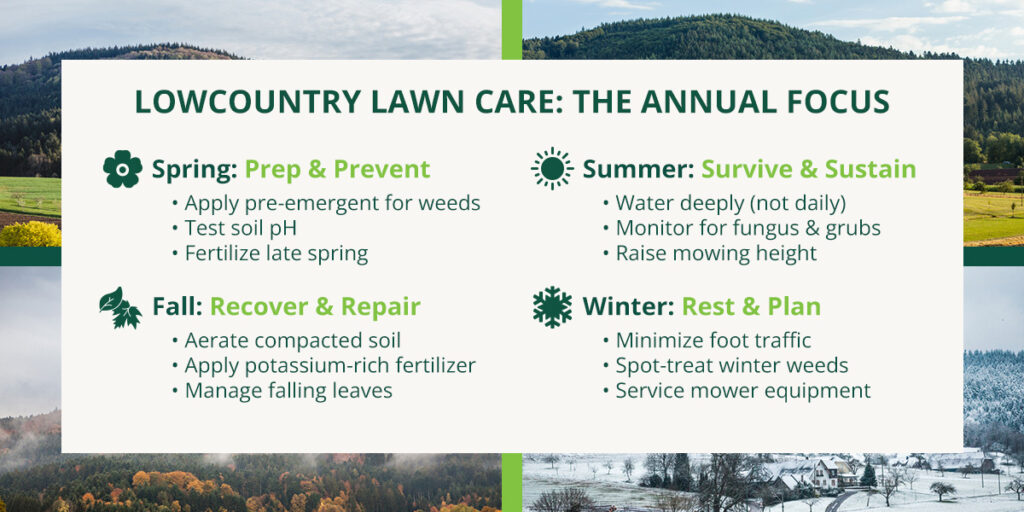
Spring is one of the most critical times of the year for your lawn. It is the period where you set the foundation for a successful summer. Properly preparing your lawn for Charleston’s seasons now is the key to minimizing stress later. You can break down lawn care during this season into early spring, from March to April, and late spring, in May.
In early spring, you can take a proactive approach in the following ways:
- Prevent weeds: Preventing weeds before they sprout is the single most important action for weed control. Applying a pre-emergent herbicide is the secret to stopping summer annual weeds like crabgrass, goosegrass and spurge before they even germinate. Timing is everything, so apply it when the soil temperature is consistently around 55°F. A second application eight to 10 weeks later is often beneficial.
- Test your soil: Charleston-area soil is sandy and often acidic, meaning your grass struggles to absorb necessary nutrients. A soil test will reveal your current pH level and determine the necessary adjustments. You may need to apply lime to raise the pH to an optimal range, ensuring your fertilizer works effectively.
- Aerate if necessary: If your lawn has significant thatch buildup or soil compaction, early spring is an ideal time for aeration. It allows your grass to breathe and prepares the soil to better receive the fertilizer coming in May.
Late spring is all about fueling growth, and you can achieve it in these ways:
- Fertilize for strength: As the soil warms and your grass breaks dormancy, it’s time to apply a balanced slow-release nitrogen fertilizer. This application provides the necessary food to help the grass build strong roots and develop the dense top growth it will need to prepare for the intense stress of the summer.
- Begin consistent mowing: Start mowing regularly, but only after the grass has fully emerged from dormancy. Stick to the “one-third rule”, which is to never remove more than one-third of the blade length in a single mow.
- Watch for pests: Insects like chinch bugs and sod webworms become more active as temperatures rise. Regularly inspect your lawn for thinning patches or chewing damage.
Summer
Summer is a season of maintenance and stress management. The goal is not rapid growth, but survival, resilience and disease prevention against the backdrop of sweltering heat and high humidity. You can help your lawn survive the heat by taking these actions:
- Water deeply: The most common mistake in summer is light, daily watering. It encourages shallow roots, making your lawn vulnerable to drought. Instead, water deeply in two to three sessions. Watering in the early morning is essential, as it allows the blades to dry quickly, which is the best defense against common summer fungus.
- Manage fungus and grubs: The high humidity and heat create a perfect breeding ground for fungal issues. Look for signs of brown patch fungus, which looks like circular, thinning brown patches with a distinct dark ring on the outer edge. Apply a lawn fungicide at the first sign of trouble. Also, look for signs of grub damage, where turf pulls up easily like a piece of carpet and treat accordingly.
- Raise your mowing height: Mowing taller can help the grass blades shade the soil, as it drastically reduces soil temperature. This helps the lawn retain moisture and keeps the grass roots cool. Taller grass is simply more resilient grass.
Fall
Fall is the season of recovery and preparation. This is the season when your grass heals from summer’s stress and stores energy for the coming dormancy, and it is important for achieving a great lawn next spring. In September and October, focus on repairing and reviving by taking these steps:
- Aerate the soil: Aeration is crucial in the fall. The process of pulling small plugs of soil from the lawn is necessary to relieve soil compaction caused by summer foot traffic and heat. It opens the soil, allowing air, water and vital nutrients to reach the root zone, significantly improving your lawn’s health.
- Apply a fall fertilizer: A fertilizer with lower nitrogen and higher potassium (K) helps the grass focus on root development and disease resistance rather than top growth before winter. This stored energy is what will give your lawn a vigorous jump-start in the spring.
Complete these winterizing tasks on your lawn in November, which is considered late fall:
- Manage falling leaves: A thick layer of wet, matted leaves is a death sentence for your grass, as it smothers the turf and invites fungal disease. Rake, bag or mulch leaves regularly until the trees are bare. Mulching is highly effective and returns organic matter to the soil.
- Complete the final mow: Lowering the mower blade slightly for the last one or two mows of the season helps prevent matting and disease over the cold, dormant winter months.
Winter
Winter is the dormant period for warm-season grasses. The green color may fade, but essential biological processes are still taking place under the soil. It is essential that you let your lawn rest. Focus on these quiet maintenance tasks:
- Stay off the grass: Minimize foot traffic on the dormant lawn, especially if it’s frozen or saturated. The brittle, dormant grass blades are easily damaged by compaction and will lead to unsightly brown marks in the spring.
- Control winter weeds: Broadleaf weeds like clover, chickweed and Poa annua (annual bluegrass) can thrive in the dormant turf. These can be spot-treated with a post-emergent herbicide or pulled by hand. Be extremely careful with weed control on Centipede grass, as it is very sensitive to many herbicides.
- Plan for the next year: Encourage homeowners to use this quiet season to perform equipment maintenance. Sharpening mower blades now will prevent a hectic rush in the spring and ensure a cleaner cut, which is better for turf health.
Get a Professional, Year-Round Lawn Care Plan
A beautiful, resilient Lowcountry lawn is a year-round project. It requires consistent, expertly timed attention to fight the humidity, manage the sandy soil and conquer the seasonal stresses that make our region so challenging. Managing the precise timing of fertilization, aeration, disease control and weed prevention can quickly become a second job for a busy homeowner.
Simply Green Landscaping is the local expert ready to handle every crucial task on this calendar. We understand the specific soil conditions and common turf problems of the Charleston area. Our residential lawn care service is the ideal, stress-free solution for homeowners who want exceptional results. We ensure your turf gets the right treatment at the right time, every time.
Contact us today to get started and enjoy a beautiful lawn without the guesswork of when to fertilize, aerate and overseed.